The Regen Campus Vision: A Climate-First Blueprint
We are building a replicable, fully developed immersive digital twin and spatial computing network for "Regen Campuses"—living laboratories that merge ecological regeneration, community-building, and technological innovation. We are dissolving the boundaries between living, learning, and working to create a resilient, circular ecosystem. By shifting private land into a regenerative "think-and-do tank," we establish protected spaces on sensitive ecological borders where daily activities become the curriculum.
The Heart of the Campus
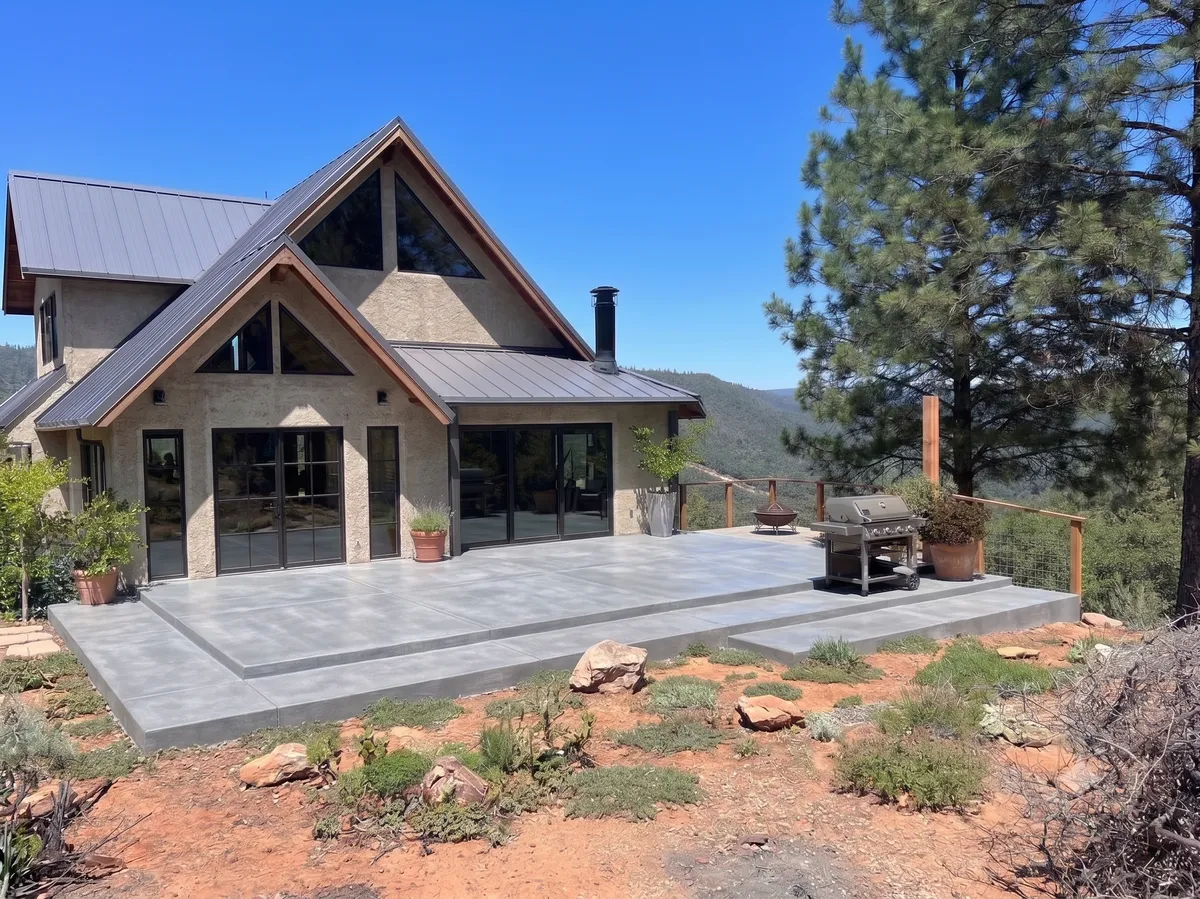
The main house at 3SUNS serves as the living pulse of our education center—where guild-based learning, spatial computing experiments, and community gatherings converge into a single, cohesive think-and-do tank.
The 11 Regenerative Domains
Our educational and operational framework is organized into 11 Core Practices that restore both landscape and community. Climate Adaptation (Climate Action) serves as our primary pilot focus, anchoring our initial deployment and technical validation efforts.
2. Living Buildings: Utilizing carbon-storing, fire-smart materials like hempcrete.
3. Clean Energy: Implementing renewable microgrids for off-grid resilience.
4. Watersheds: Restoring natural hydrology and gravity-fed water systems.
5. Food Webs: Ethical livestock management and integrated food production.
6. Circular Economies: Turning waste streams into local value (e.g., biodiesel, upcycling).
7. Community Governance: Using the 508(c) PMA framework for collaborative management.
8. Whole-Being Care: Integrating wellness, ceremony, and community health.
9. Lifelong Learning: Guild-based education from novice to master.
10. Appropriate Tech: Deploying IoT sensors, drone mapping, and spatial computing.
11. Climate Adaptation (Primary Pilot Focus): Scalable restoration through "Good Fire" stewardship, biomass management, and carbon sequestration.
The Digital Twin Engine & Field Telemetry
The digital twin for the Regen Campus is more than just a globally accessible, gamified virtual model. The walkthrough serves as a fully immersive educational experience that directly reflects the hands-on work and curriculum taught onsite.
It acts as an open-source hub of innovation, featuring direct links to the independent contractors behind the campus renovations. Users can explore the integration of geothermal radiant heating, carbon-negative and fire-resilient hempcrete siding, and natural sheepswool insulation.
Furthermore, the twin incorporates accurately cataloged ArcGIS natural habitat data, mapping every tree in our agroforestry systems and logging all traditional back-burning sites. This living database extends beyond the 3SUNS property, recording telemetry and ecological actions from any offsite PMA member to create a comprehensive, real-time map of community effort and climate resilience.
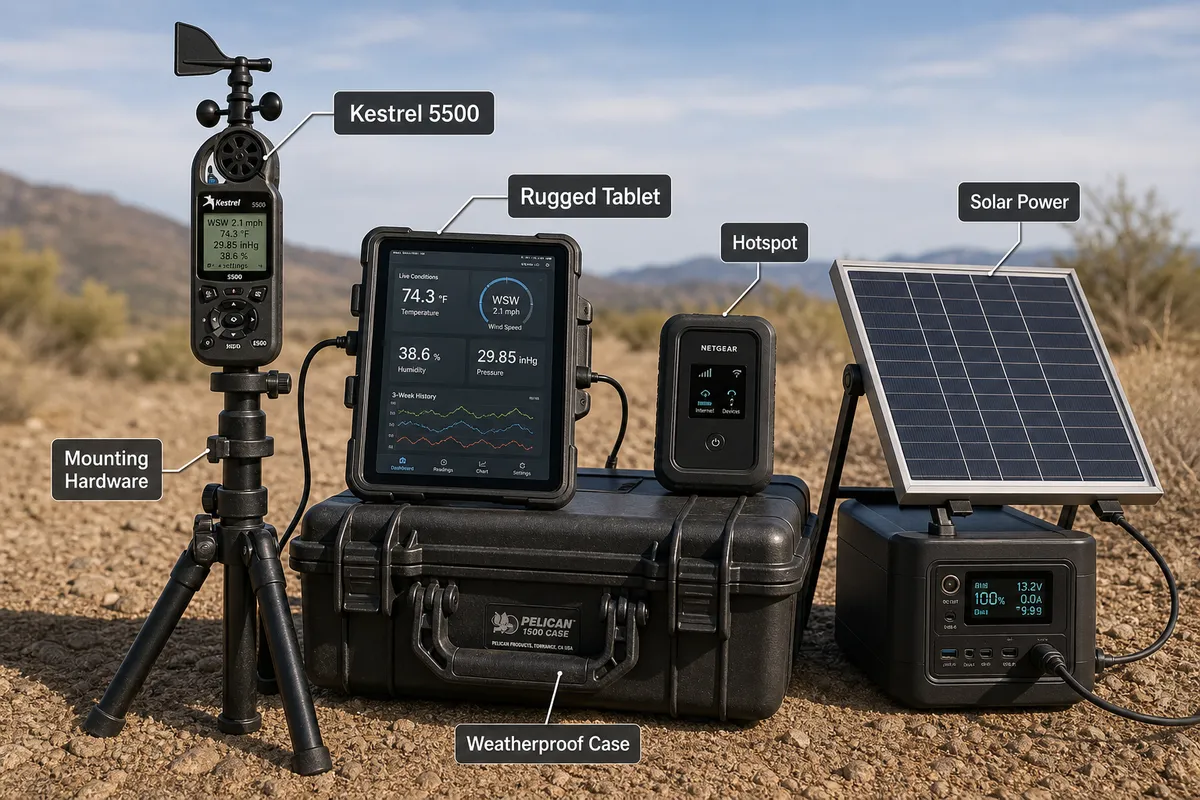
To bridge the physical and digital, we deploy ruggedized "Fly-Away" Telemetry Kits directly to decentralized burn and biochar sites. These edge nodes capture critical micro-climate data—such as relative humidity and wind speed vectors—which is pushed via cellular uplink into the spatial twin.
High-Fidelity Data
Custom IoT sensors and drone mapping feeding live ecological health metrics (carbon, soil moisture).
Gamified Education
An accessible 101 pathway inspiring virtual observers to sign up for physical apprenticeships.
Global Think Tank
Remote machine access allowing global scientists to help manage local renewable microgrids.
Pilot Focus: Climate Action & The "Physical/Digital" Bridge
Our mission is to bridge the gap between climate anxiety and actionable, scalable restoration. We do not just observe; we intervene. Our climate strategy centers on a coordinated network of Indigenous fire practitioners, ranchers, and agroecologists.
Good Fire & Biomass Management: We utilize TEK-guided traditional burns and intentional grazing to reduce hazardous fuel loads, restore patchy, fire-adapted landscapes, and protect communities from catastrophic wildfire. Our low-intensity approach produces exponentially more charcoal, which we capture as a resource.
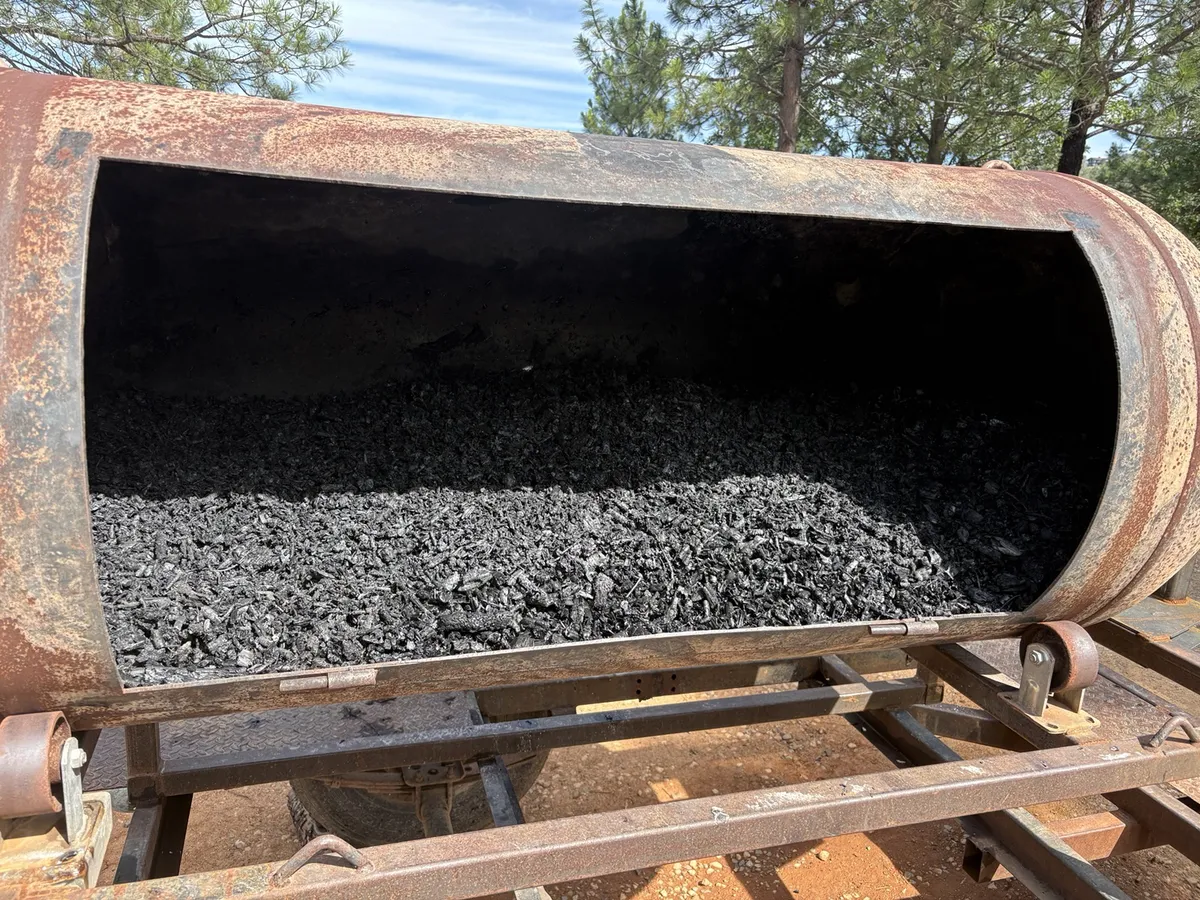
Biochar & Carbon Sequestration: Biomass captured through thinning is routed through distributed, community-operated kilns. We transform short-lived plant carbon into stable, aromatic biochar that persists in soils for centuries, improving water-holding capacity, nutrient retention, and microbial life.
The Bioregional Carbon Corridor: We are establishing a cross-bioregional corridor that routes biochar production through a decentralized, community-operated model. This empowers local stewards to convert waste into soil health without relying on capital-intensive industrial plants.
Immersive Technology: The AVN MRV Spine
We leverage Extended Reality (XR) formats to create a functional "physical/digital" bridge, allowing global users to collaborate on local solutions:
> Global Access: Through our digital twin (VR/Desktop), global users explore the campus, participate in gamified educational modules, and access real-time environmental data for predictive modeling.
> On-Site Augmentation: On-site, apprentices use AR to overlay critical data—such as soil metrics and equipment status—directly onto the physical environment.
Core Philosophy: TEKTech (Traditional Ecological Knowledge + Technology)
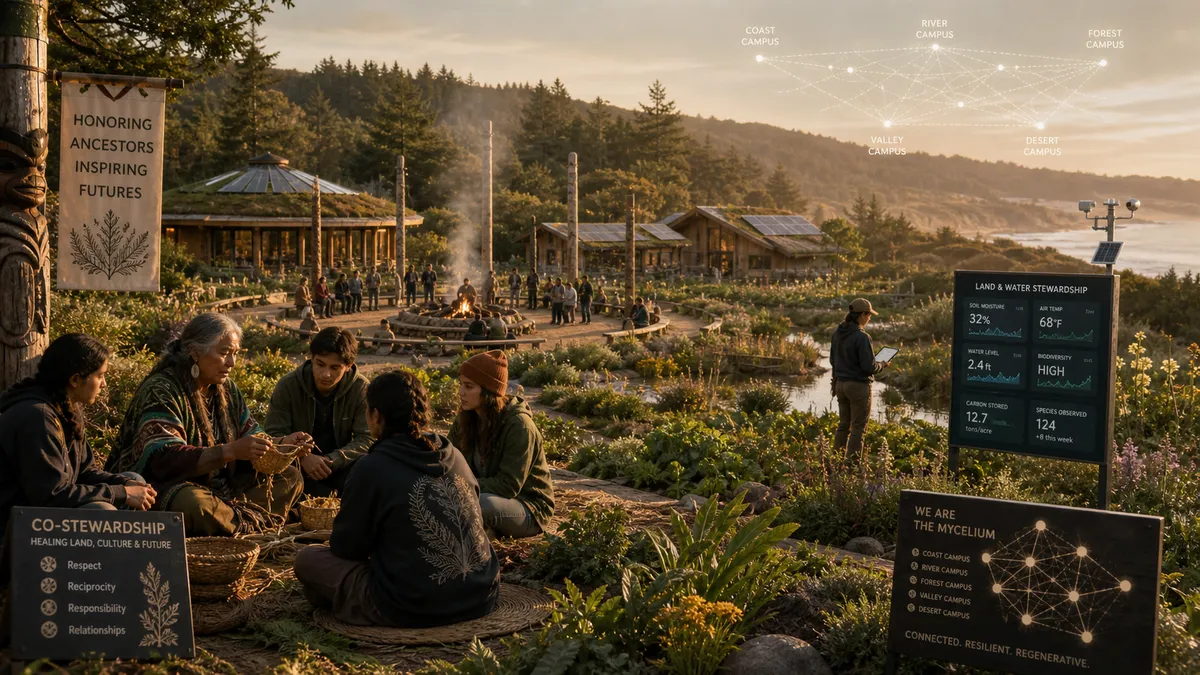
Our work is deeply informed by the synthesis of Traditional Ecological Knowledge (TEK) and appropriate technology.
Cultural Co-Stewardship: Our 508(c) PMA operates under the direct guidance of Indigenous leadership, including three Maidu representatives on our Board of Directors. This governance structure ensures that Traditional Ecological Knowledge (TEK) drives our land management and guarantees the space is kept available for traditional practices and ceremony. Together, we utilize and share this TEK data to co-steward bordering watersheds and habitats.
Generational Exchange: We create a fair exchange where Elders bring historic memory and craft, while Youth bring physical energy and innovation.
The Mycelium Model
Our "Mycelium Model" focuses on building a county-wide web of working, teaching landscapes. We share knowledge, resources, and fair-exchange apprenticeships across properties, enriching the entire community through collaboration. This platform enables remote machine access for onsite operations, effectively transforming isolated bioregions into a global network where remote technologists and experts can actively support and innovate on local experimental systems.
Legal Innovation: 508(c) Private Ministerial Association (PMA)
To scale this work rapidly, we operate under a 508(c) Private Ministerial Association legal framework. This allows our communities to safely run multi-operator kilns, practice fire stewardship, and manage educational sanctuaries outside of prohibitive commercial regulations, while maintaining strict safety, accountability, and tax-exempt status. Ultimately, this project serves to establish a credible, transparent, and replicable blueprint for instrumenting and visualizing regenerative land stewardship.
Project Roadmap & Development
From establishing the initial connective backbone to deploying the full Extended Reality (XR) architecture, our roadmap bridges global climate finance with decentralized local action.
Environmental Impact Conference
Deployment of the live Minimum Viable Experience (MVE). A shared Zoom backbone connecting the conference floor to live moderators at 3SUNS (Nevada City, California).
Catalyst: Strategic Partners & Seed Capital.
Building the immersive spatial environment. Deployment of custom environmental sensors, 3D spatial mapping, and core XR development over 6 months.
> Spatial Network Platform & Hosting: $20,000
> 3D Modeling and Asset Creation: $10,000
> Data Science/Modeling Lead (5 months) for Simulation & Replicable Design: $30,000
> Contingency/Technical Buffer: $5,000
> Infrastructure & Power Integration ($10,000): Installation and integration with the site's renewable microgrids for resilient, continuous operation.
Scaling the single farm model into a globally accessible mycelium network of interconnected living laboratories.
Strategic Alliances // Network Nodes
Our mission is accelerated by a coalition of allied organizations, research institutions, and technology partners.
The Spatial Network
Architecting the foundational spatial computing environments that house our digital twins, empowering global users to experience and collaborate within our decentralized network.
> INITIATE_LINKAVN Earth
Providing the immersive MRV (Measurement, Reporting, and Verification) spine and digital twin technology linking our physical pilot sites with global data observers.
> INITIATE_LINKPartner Name
Brief description of the partnership, shared resources, or joint capability.
3SUNS // Physical Node Uplink
Live satellite and drone surveillance captures of the Alpha test site. Awaiting new telemetry packages.